
FOREST PRODUCTS
Sawn Timber and Logs
Jetliner SARL – Mediation and Export of Timber from Cameroon
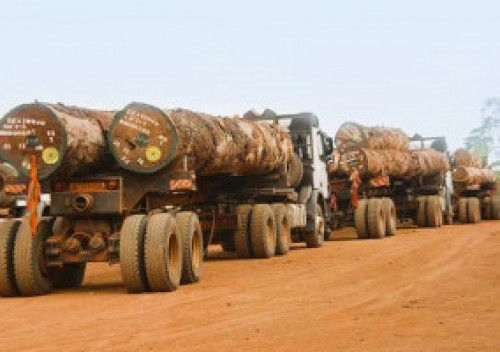
Jetliner SARL, based in Cameroon, specializes in the mediation, securing, and export of legally authorized timber, compliant with national and international standards. We support our partners throughout the entire supply chain, from the timber yard (foresters and licensed operators) to the Douala Autonomous Port, ensuring traceability, compliance, and controlled logistics.
Our activity covers all timber species authorized for export, including:
🌳 Available Species:
-
Iroko (Kambala)
-
Sapelli
-
Azobé (Bongossi)
-
Padouk
-
Fraké (Limba)
-
Ayous (Obeche)
-
Tali
-
Doussié
-
Bibolo
-
Movingui
-
Bilinga
-
Kotibé
-
Sipo
-
Kosipo
-
Framiré
-
Bossé
-
Okoumé
-
Ebiara
-
Wengé
We ensure rigorous control of the supply chain, including:
🔹 Verification of forestry permits (concessions, AV, DF10, DF200)
🔹 Monitoring of sawing, cubing, and marking operations
🔹 SGS / Ciblo / Aninf inspections (depending on the country)
🔹 Compliance with CITES, FLEGT, and EUTR regulations
🔹 Organization of loading, fumigation, and maritime shipment (FCL / LCL)
Thanks to our network of licensed suppliers, logistics experts, and freight forwarders, we facilitate secure exports to Europe, China, the Middle East, India, and the Americas.



Our Journey
Founded in Cameroon, Jet Liner SARL is a Cameroonian-registered company that has, over the years, built a strong reputation in the field of international trade and regional logistics.
Driven by an ambitious vision and a strategy of progressive expansion, the company has diversified its portfolio of activities to operate in several key sectors:
-
Public procurement and public–private partnerships (PPP);
-
Import–export and international trading of agricultural, mineral, and petroleum commodities;
-
Financial products, including bonds and equities;
-
Integrated logistics services within the CEMAC region.
In parallel, Jet Liner SARL distinguishes itself through its social commitment, supporting Social and Solidarity Economy Organizations (SSEOs) and various local initiatives that contribute to community development.
Guided by values of innovation, responsibility, and sustainable performance, Jet Liner SARL continues to pursue its mission: to become a major player in African economic integration and responsible trade.
Believe in the Numbers
Key Recent Figures for the Central African Economic and Monetary Community (CEMAC):
-
Intra-regional trade (between CEMAC member countries) represents only about 3.5% of the region’s total trade. (Source: Union Sonapresse+1)
-
In 2022, the Cameroon–Gabon corridor alone accounted for 60.5% of cross-border transactions in electronic money. (Source: L’Observateur Du Maroc)
-
For Cameroon, in 2022, imports from other African countries totaled FCFA 598.2 billion, representing 12.2% of its total import volume. (Source: Eco Finances)
-
In the financial sector, CEMAC’s stock market capitalization reached FCFA 1,633.7 billion in June 2024, a +13.5% increase year-on-year. (Source: CEMAC ECO FINANCE)
-
Finally, the current account balance of the CEMAC region remained in surplus at approximately 6.8% of GDP in 2024.
Cameroon
General Data – Cameroon
-
Real GDP grew by 3.5% in 2024, compared to 3.2% in 2023. (Source: World Bank+1)
-
The agriculture sector accounted for approximately 17.3% of GDP in 2023. (Source: Statista+1)
-
Mineral production (all types of minerals) reached approximately 5,217,970 metric tons in 2022. (Source: CEIC Data)
Trade and Exports:
-
Between 2014–2017, Cameroon accounted for 24.7% of intra-CEMAC trade. (Source: Business in Cameroon)
-
In 2023, its exports included: crude oil (~37.7%), liquefied gas (~14.1%), cocoa (~12%), and timber (~6.7%) of total exports. (Source: Lloyds Bank Trade)
-
In agriculture, Cameroon produced approximately 350,000 tonnes of cotton in 2021, representing ~73.4% of CEMAC’s cotton production. (Source: Business in Cameroon)
-
Cameroon consumes over 50% of imported goods from the sub-region and accounts for ~52% of total CEMAC consumption.
Agriculture Sector and Crop Production:
-
In 2023, the agriculture sector employed approximately 60% of the active population. (Source: Business237+1)
-
Key crop production:
-
Maize: ~2.36 million tonnes in 2023 (up from ~2.20 million tonnes in 2018). (Source: Business in Cameroon)
-
Rice: production increased from ~314,000 tonnes in 2018 to ~450,000 tonnes in 2022. (Source: Business in Cameroon)
-
Tubers (yam, cassava): for example, cassava ~5.34 million tonnes/year. (Source: Business in Cameroon)
-
Chad
General Economic Data – Chad
-
In 2023, agriculture accounted for approximately 25.13% of Chad’s GDP. (Source: African Development Bank+3, Statista+3, Lloyds Bank Trade+3)
-
The industrial sector (including oil) represented around 44.37% of GDP in 2023. (Source: Statista+1)
-
The services sector accounted for approximately 28.7% of GDP in 2023. (Source: Statista)
-
Mineral production in 2022 was estimated at ~6,160,600 metric tons. (Source: CEIC Data)
Agriculture & Crop Production
-
Chad has approximately 39 million hectares of arable land, representing ~39% of the country’s territory. (Source: African Futures+1)
-
The agriculture sector employed around 69–75% of the active population. (Source: World Bank+1)
-
Example crop production in 2023:
-
Sorghum: ~878,000 tonnes (Source: Indian Exam Hub+1)
-
Groundnuts (peanuts): ~782,000 tonnes (Source: Indian Exam Hub+1)
-
-
Key cash crops for export include cotton, gum arabic, and sesame.
Central African Republic (CAR)
Key Production Indicators – Central African Republic (CAR)
-
In 2023, agriculture accounted for approximately 28.6% of CAR’s GDP. (Source: Statista+2, Agriculture and Rural Development+2)
-
Also in 2023, the agriculture sector employed ~70.5% of the active population. (Source: Agriculture and Rural Development+2, World Bank+2)
-
In 2020, the crop production index was approximately 165.6 (2004–06 = 100). (Source: Agriculture and Rural Development)
-
The country has around 15 million hectares of arable land, though only a marginal portion is actually cultivated. (Source: PR Newswire+1)
Export Production:
-
Key export products include minerals (diamonds, gold), timber, and cotton. For example:
-
Agricultural raw materials (excluding fuels) represented about 11.7% of goods exports in 2023. (Source: CEIC Data)
-
Cotton production was estimated at 25,000–45,000 tonnes annually.
-
Republic of the Congo
Mining / Natural Resources Sector
-
In 2022, total mineral production (metals and minerals) was approximately 14,009,077 tonnes. (Source: CEIC Data)
-
Breakdown by product in 2022: (Source: USGS Publications)
-
Copper cathode: ~9,040 tonnes
-
Refined zinc: ~11,938 tonnes
-
Iron ore: ~70,000 tonnes (gross weight)
-
Natural gem diamonds: ~3,534 carats
-
Crude oil: ~95,630 thousand barrels (~95.63 million barrels)
-
Natural gas: ~420,000 thousand cubic meters (~420 million m³)
-
Agriculture Sector
-
Agriculture contributes only about 5% of GDP. (Source: Trésor Économie+1)
-
Less than 4% of arable land (out of ~10 million potential hectares) is actually cultivated. (Source: Trésor Économie)
-
Estimated local agricultural production: ~USD 2.8 billion in 2021, rising to ~USD 3.1 billion in 2022.